


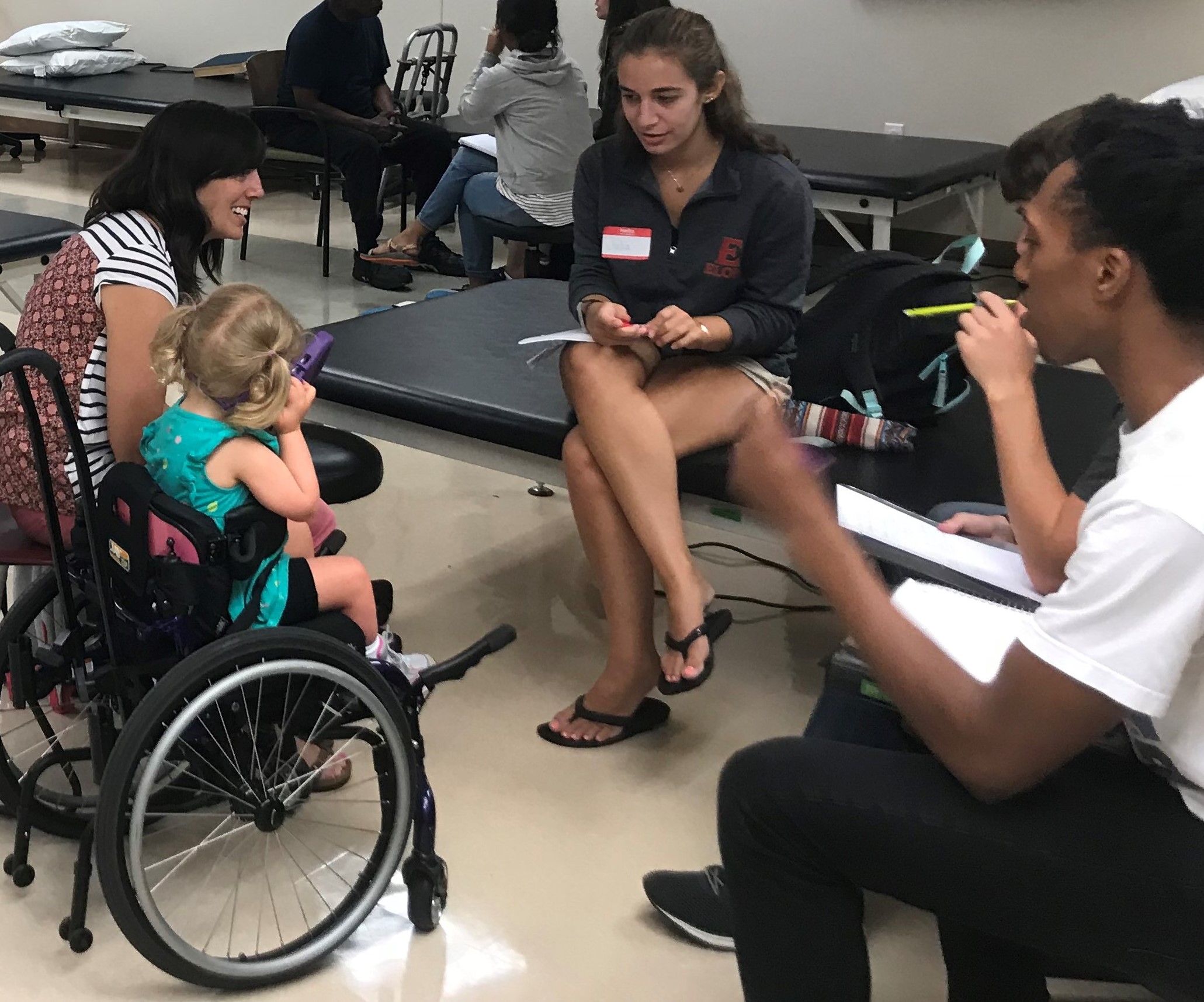
Collaboration between 榴莲app官方网站入 Engineering Program and the Department of Physical Therapy Education offers students an opportunity to connect engineering design work to the health sector. Students are partnering with people in the community who have mobility limitations and designing products intended to make their daily activities more efficient or achievable.
Each year, the 鈥淓ngineering Design for Service鈥� course provides 榴莲app官方网站入 students the chance to tackle real-world design challenges and design solutions that can have a positive impact on the broader community. A marriage between service learning and research, the EGR 221SL course teaches students skills they will need when joining the workforce, including how to interview a stakeholder and how to collaborate in small teams to solve problems.
This fall, faculty and staff initiated a collaboration between the university’s engineering program and Department of Physical Therapy Education in the School of Health Sciences. This new development is offering students a unique opportunity to connect the engineering design work they do to the health care sector. Specifically, students are partnering with people in the greater Elon community who have mobility limitations and designing products intended to make their daily activities more efficient or achievable.
Sirena Hargrove-Leak, associate professor of engineering, and Paula DiBiasio, associate professor of physical therapy education, worked together during the summer to design coursework that would support student learning in a new and engaged way. Since the beginning of the semester, the course has utilized innovative teaching and learning techniques, including role play and jigsaws, to teach students how to interview and gather data from clients 鈥� 鈥渟takeholders鈥� in engineering terms 鈥� and how to work as a team.
鈥淓ngineering professionals design devices, structures or systems to help people and frequently work collaboratively, so these experiences help to prepare students for what is to come,鈥� Hargrove-Leak says.
Early in the course, Nita Skillman, director of the client and standardized patient program in the School of Health Sciences, worked with Hargrove Leak and DiBiasio to introduce the class to a standardized patient 鈥� an actor who plays a role for a healthcare learning event. By using good interview practices, the students were able to overcome assumptions they might have had about the client鈥檚 story and more accurately explore the client鈥檚 design needs. This is reflective of the course鈥檚 emphasis on empathic interview skills. 鈥淭he interview is like a dance,鈥� DiBiasio says.
Though it is common practice in healthcare to think of the interview as an 鈥渋nterrogation鈥� to gather data for the process of identifying a client鈥檚 root concerns and symptoms, DiBiasio encourages students to think of it as a partnership. 鈥淲e do lots of sensitive and responsive listening instead of firing off yes or no questions,鈥� she says. In this way, students are learning to focus on the client first, and respond to the data the client provides with more in-depth questions, gathering useful information
After learning these skills, role-playing and preparing intensely for their first actual client experience, students on Sept. 18 had the opportunity to meet with community stakeholders (clients) and practice their interview skills. This interaction with real clients has contributed to the success of the course. 鈥淲e talk about disabilities on paper and watch videos, but you really get the emotional side of things and a different perspective鈥� from interviewing clients, says Noah Kagan 鈥�22. 鈥淚 think that really helped me see the engineering project that we鈥檙e doing much differently.鈥�
The students realize that what they are doing has a real, concrete effect and that has given them the inspiration to throw themselves into their projects wholeheartedly.
鈥淲e feel like we can actually make a difference in their lives,鈥� says Sophomore Parker Verlander. Some students have even decided to follow their interest in this area by pursuing internships facilitated by DiBiasio that focus on the innovation and utilization of durable medical equipment. That is what is so special about this collaboration, DiBiasio notes. 鈥淚t is an integration of expertise and passion, but it also grew from students expanding their curiosity.鈥�
The Center for the Advancement of Teaching and Learning has supported the work of DiBiasio, Hargrove-Leak and Skillman with a mini-grant. The center’s director, Deandra Little, describes their work as 鈥渂oth innovative and promising.鈥� The project title is 鈥淚nfusing Humanity into Engineering Design.鈥�
Hargrove-Leak says 鈥渢he engineering design process that is typically taught includes little, if any, consideration of the needs of potential users or stakeholders, so it is no surprise when engineered solutions fail to meet the intended goals.鈥� DiBiasio, Hargrove-Leak and Skillman look forward to using this course as a model to study how the humanistic approaches influence engineering design.
On Dec. 3, the engineering students will present posters at the School of Health Sciences Global Engagement and Research Forum, celebrating their Engineering Design for Service projects along with physical therapy and physician assistant students鈥� work in research and global engagement.
This celebration of student work will take place in the Great Hall of the Global Commons from 11:30 a.m. to 1 p.m. The entire campus and Elon community are invited to attend.