


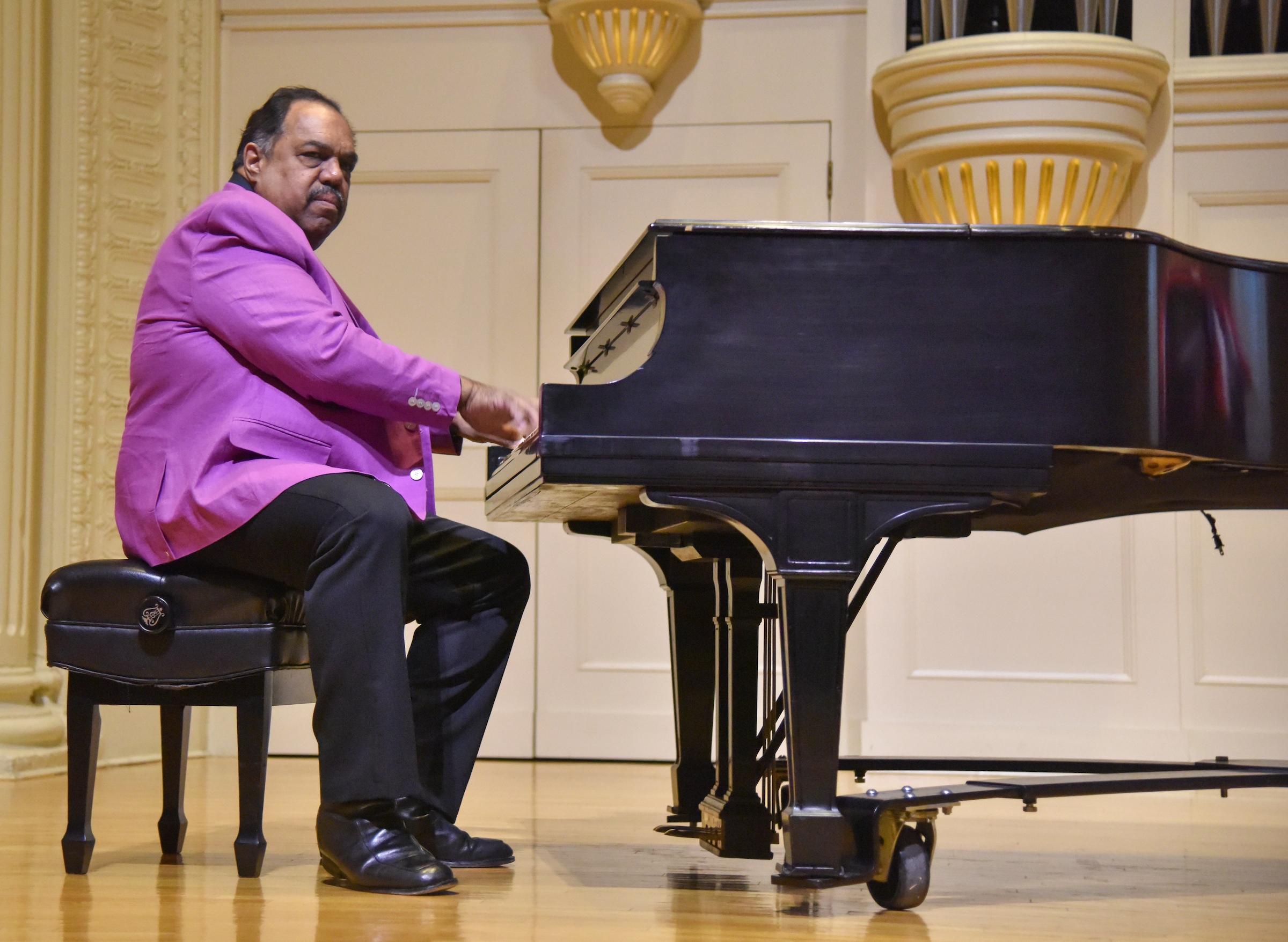
Davis visited 榴莲app官方网站入 on Feb. 20 as part of the Liberal Arts Forum lecture series.
Born in 1958 in Chicago, Illinois, Daryl Davis moved around the world with his parents during most of his early childhood. Living in various foreign countries, including African nations, Davis became familiar with the integrated schools catering to the children of foreign diplomats. In these educational settings, children from diverse nations, races, and cultures were educated together. When Davis moved back to the United States in 1968, he was exposed to segregated schools and acts of everyday racism.
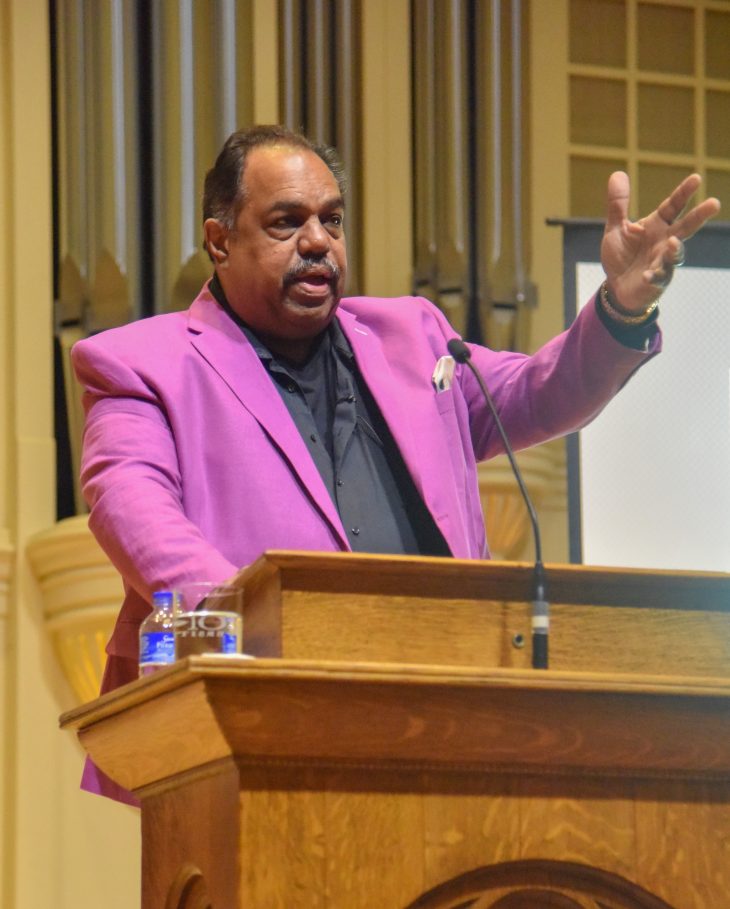
鈥淏elieve it or not, at the age of 10, I had never heard the word racism, it did not exist in my world,鈥� Davis explained. 鈥淚 accepted it as an existence, but what I didn鈥檛 know was why? How can you hate me when you don鈥檛 even know me?鈥�
At that young age, Davis decided he would spend the rest of his life trying to answer that question.
Davis, a Howard University graduate, author and musician, shared his experiences confronting racism on Tuesday, Feb. 20, as part of the Liberal Arts Forum speaker series. Davis was introduced by Benji Stern 鈥�26, the president of the Liberal Arts Forum.
Davis would go on to earn a bachelor’s degree in music from Howard University in 1980. After that, he began playing the piano professionally and traveling the world once more. Davis has played backup for musical legends such as Chuck Berry, Jerry Lee Lewis and The Legendary Blues Band. During his time off the stage, Davis delved into the history of antisemitism, racism and other supremacist ideologies.
鈥淢y profession is music, but my obsession is studying race relations,鈥� Davis said to the crowd.
Davis decided the best way he could work to understand and attempt to improve race relations was by seeking out, engaging in dialogue with and befriending members of the Ku Klux Klan.
鈥淲ho better to answer my questions than someone who would go so far as to join an organization that has an over 100-year history of practicing hating people?鈥� he said.
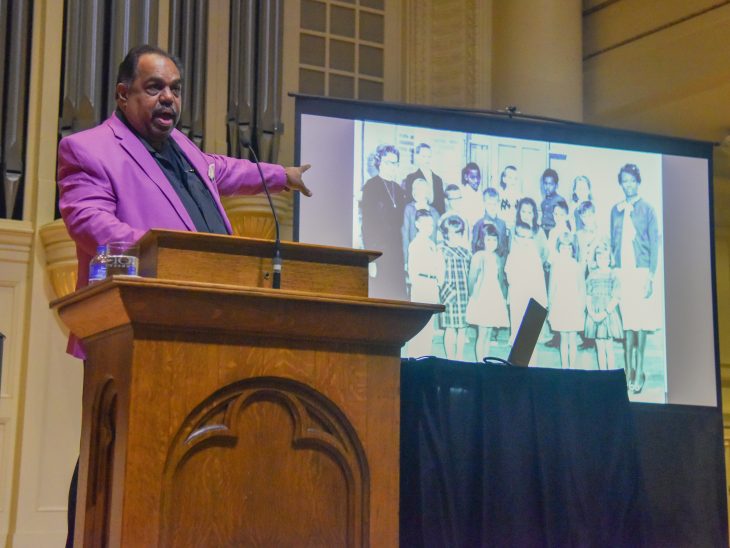
Across the next 30 years, Davis spent time interviewing and befriending members of the white supremacist group. He discovered that Klansmen held numerous misconceptions about black people, primarily rooted in intense indoctrination during their youth. Davis recounted that getting to know him as a human being made it increasingly challenging for the members to uphold their prejudices. Klan members have often invited Davis to meetings, and they have given him their robes and hoods after Davis convinced them to leave the Klan. He keeps the former members鈥� robes and hoods with pride, as they represent the shift toward a more inclusive and tolerant mindset. He has been directly responsible for over 40 people leaving the Klan.
After concluding his lecture, he entertained the crowd with a piano performance, playing a lively riff that he would frequently play on stage at his shows. He then spent time responding to several audience questions. Before leaving the stage, he encouraged the crowd in Whitley to have difficult conversations, to listen to controversial viewpoints and to challenge themselves to embrace discomfort in the pursuit of finding common ground for the sake of humanity.
鈥淚gnorance breeds fear,鈥� he said. 鈥淲e fear things we don鈥檛 understand. Fear will turn into hatred, and hatred will turn into destruction.鈥�
Every semester, the Liberal Arts Forum votes on two speakers to visit 榴莲app官方网站入 campus and share their experiences and expertise on a variety of topics. The forum鈥檚 next lecture event will be on March 11, when Olympian Alexi Pappas will speak at Whitley Auditorium at 7:30 p.m.