


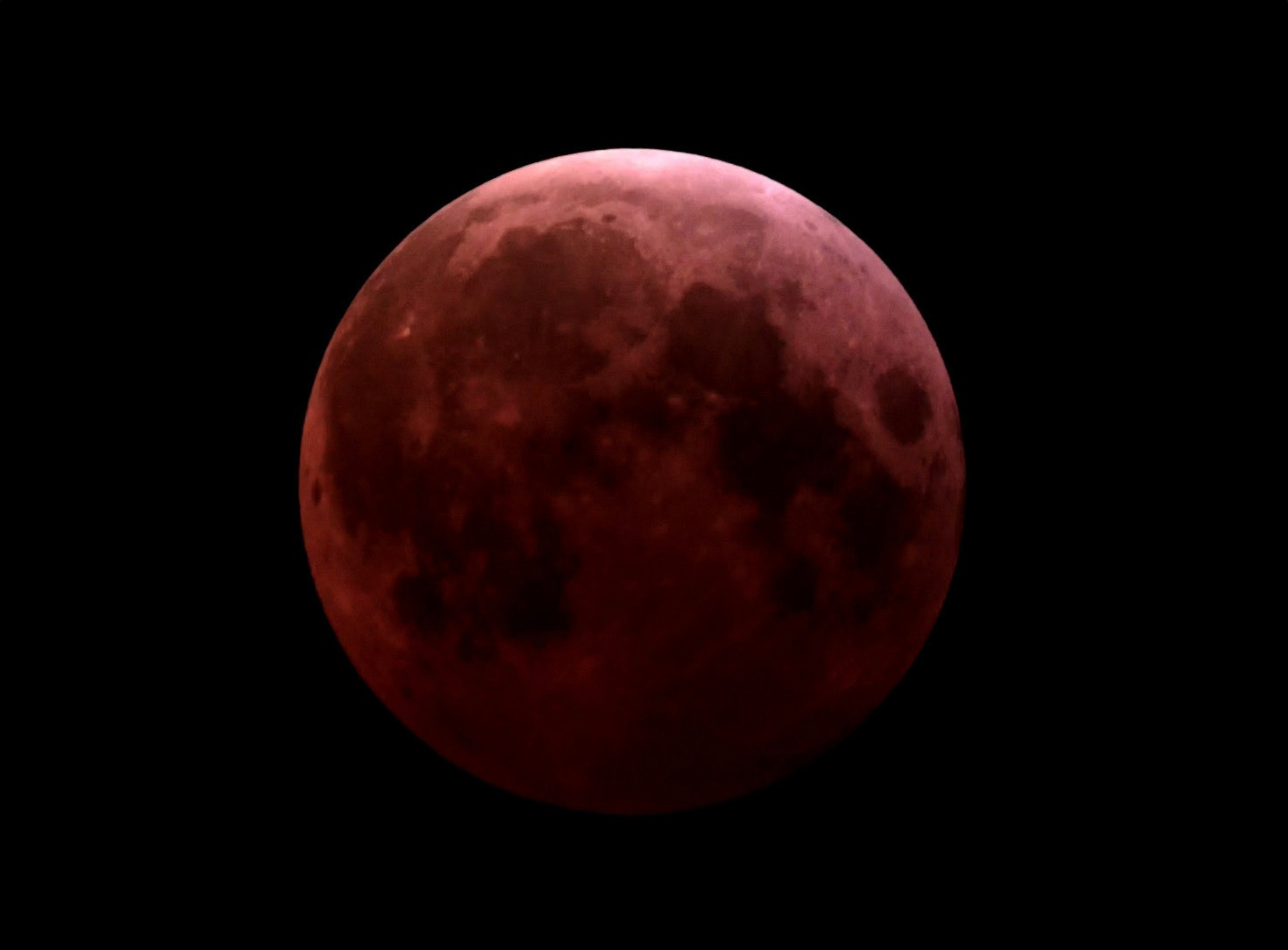
Nearly 120 榴莲app官方网站入 students, faculty, and staff gathered to observe the moon passing into Earth鈥檚 shadow during a total lunar eclipse.
Around 120 榴莲app官方网站入 students, faculty, and staff gathered under the star-strewn sky on the Young Commons lawn in front of Moseley Center at 1 a.m. on Friday, March 14 to witness a breathtaking total lunar eclipse鈥攁 celestial event where the Earth passes directly between the Sun and the Moon, casting its shadow across the lunar surface.
Historic Neighborhood Faculty Director, Claudine Moreau, collaborated with the Elon Astronomy Club to host the late-night viewing party, complete with hot cocoa and Moon Pies鈥攁 playful nod to the moon’s temporary plunge into darkness on 鈥淧i Day.鈥� Sarah Ann Chapman, associate director of Residence Life for residential education and community development, also joined the moon-gazing festivities, handing out cocoa to attendees.
The Astronomy Club showcased an array of telescopes, offering attendees the chance to observe the eclipse up close and capture their own images through the eyepiece. Adding to the scientific intrigue, Tim Martin, an adjunct professor in the Department of Physics and Astronomy, set up advanced telescope-imaging systems鈥攑art of a decade-long project aimed at meticulously photographing lunar eclipses that outline Earth鈥檚 full umbral shadow.
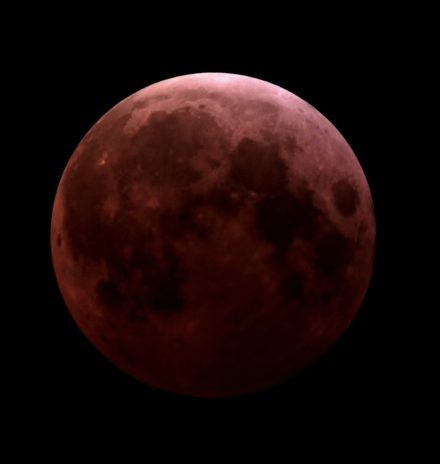
The crowd settled onto blankets and adirondack chairs on the grass, buzzing with anticipation as the moon entered totality at 2:26 a.m.. During this phase, the moon adopted a striking dark red hue鈥攁 result of Rayleigh scattering, where shorter wavelengths of sunlight scatter in Earth鈥檚 atmosphere, allowing only the longer, red wavelengths to bend around the planet and illuminate the lunar surface.
For those who missed this awe-inspiring event, the next total lunar eclipse visible from 榴莲app官方网站入 is already on the horizon, March 2026, but the eclipse will only be visible for a short time at moon set.