


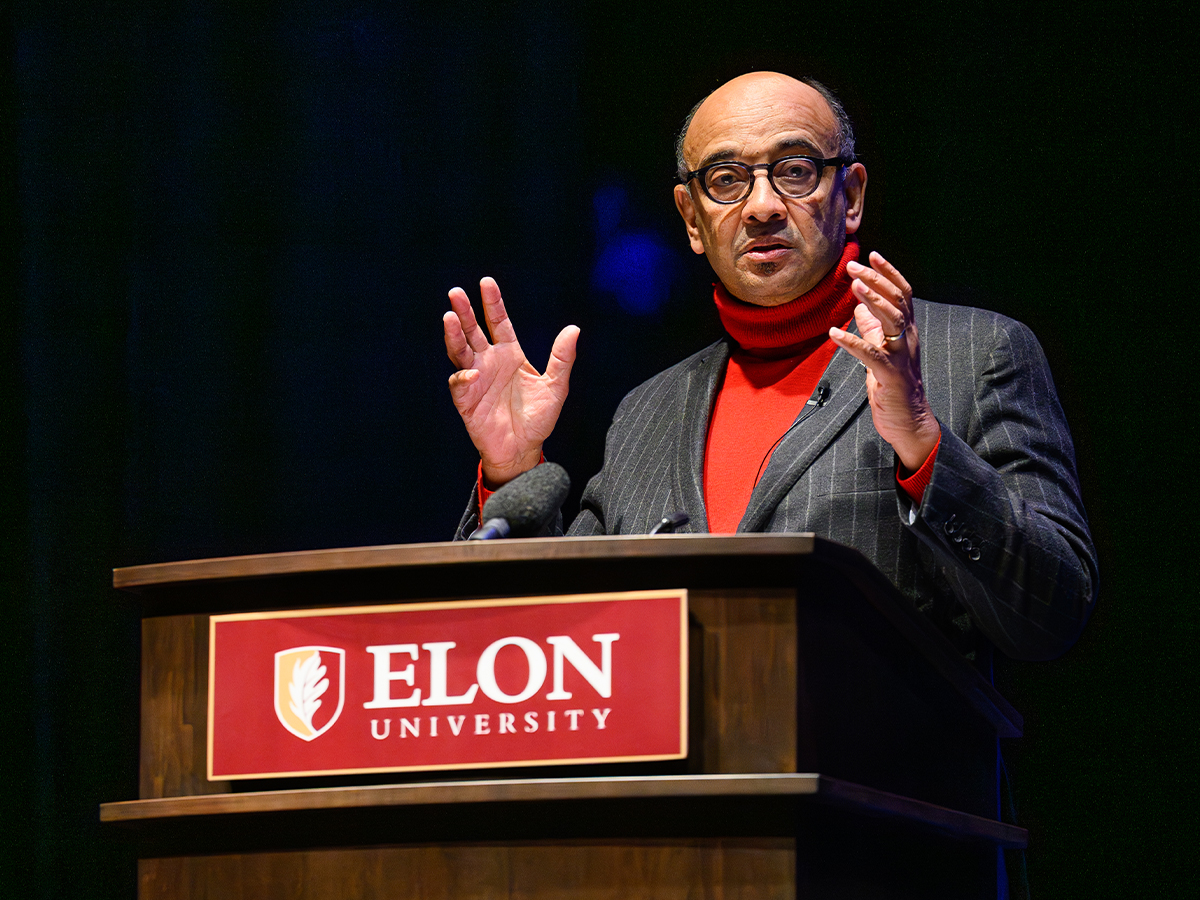
Scholar and ethicist Kwame Anthony Appiah delivered the Martin Luther King, Jr. Commemorative Address on Jan. 8, offering a look at the civil rights leader's life examining "the ultimate moral truth about the man in the pulpit."
Before an audience in McCrary Theatre at 榴莲app官方网站入, scholar and ethicist Kwame Anthony Appiah proposed that, when discussing Martin Luther King, Jr. there is a “contest over the myth” of the man.
鈥淭here was Martin Luther King as prophetic leader (鈥�) then there was King as Christ, suffering imprisonment and assault to redeem his people, bearing the cross,鈥� said Appiah. 鈥淥thers saw him as the heir to the social gospel of the Baptist minister Walter Rauschenbusch. Many in the far-flown network of pacifists saw King as an American Mahatman, following in Ghandi鈥檚 steady path.鈥�
But Appiah says these images of King often come face-to-face with critical images of him, including being 鈥渂y today鈥檚 standards, remarkably chauvinist, concerning his wife,鈥� and criticism from those in the Black Power movement.
鈥淲e could propose a reconciliation of these versions of King (鈥�) for the fact is that these different stories are not as hard to bring together as they might seem,鈥� Appiah said. 鈥淗e did lead Black America for a while, speaking to it and for it. He did suffer for his people, as did thousands of others in the movement. And the force of his acceptance of that suffering was part of what made possible the legislative reforms, the Civil Rights and Voting Rights Act in the early ’60s, that provided legal recourse to Blacks in the American South. And so he was both the suffering Christ and the campaign in Moses. But he was also no saint.鈥�
Appiah, a professor at New York University who writes a weekly column 鈥淭he Ethicist鈥� in The New York Times Magazine, delivered the Martin Luther King, Jr. Commemorative Address on Thursday, Jan. 8, part of the 榴莲app官方网站入 Speaker Series. Appiah was born in London to a Black father and a white mother, raised in Ghana and educated at Cambridge University, where he received a doctorate in philosophy. His book 鈥淚n My Father鈥檚 House鈥� and his collaborations with Henry Louis Gates, Jr. are major works of African struggles for self-determination. Following the formal lecture, Appiah also took questions from students and faculty members.
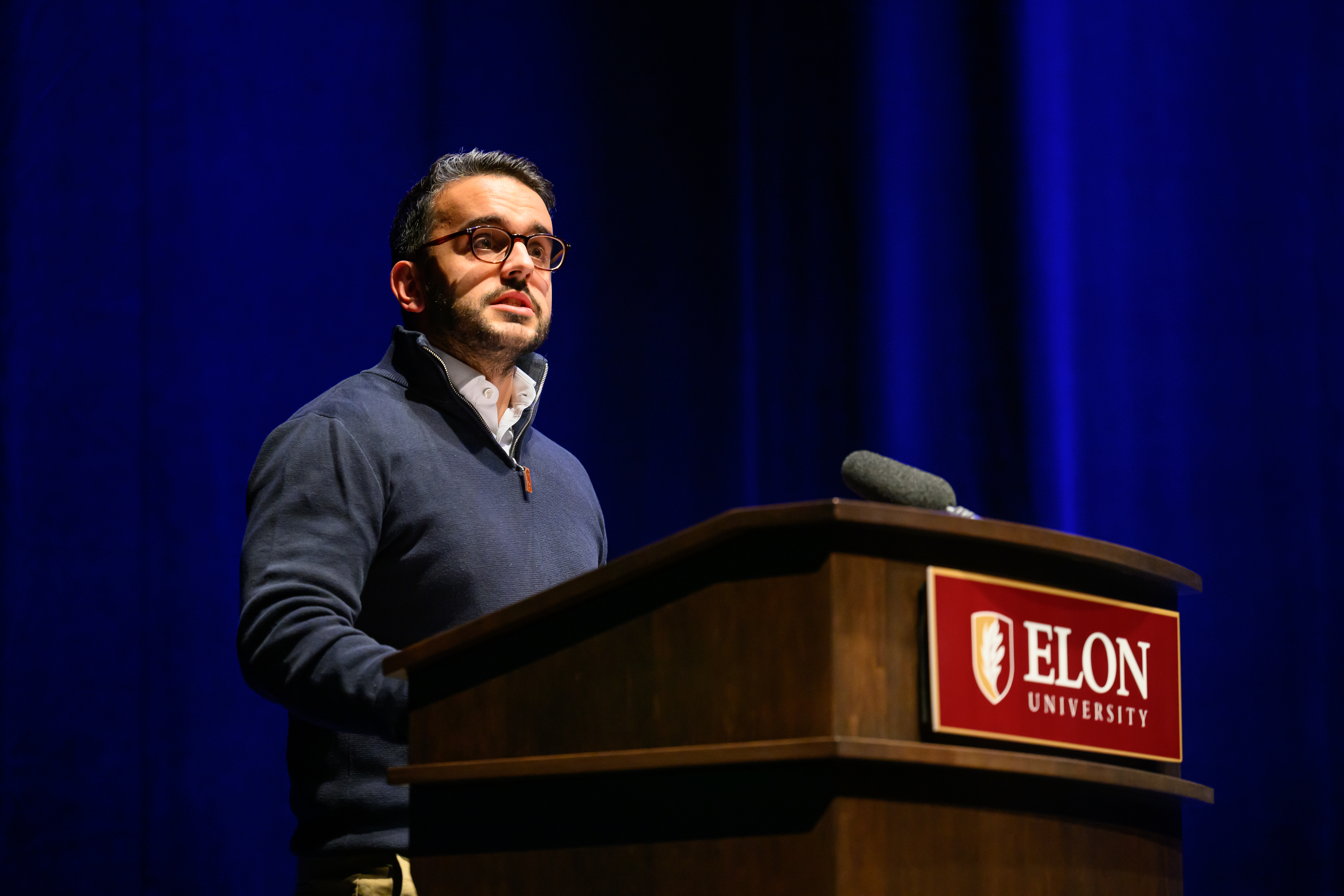
In his introduction of Appiah, Tom Ritchie, a Fulbright Visiting Scholar in the Department of Chemistry, highlighted how Appiah鈥檚 work reflects King鈥檚 vision of 鈥渂eloved community, a society where justice, reconciliation and mutual respect replace division and oppression.鈥�
鈥�(Appiah鈥檚) life exemplifies how our identities are enriched through genuine engagement across difference, rather than bounded by the categories that we’ve born into,鈥� said Ritchie, who teaches at the University of Warwick in England. 鈥淭his kind of thinking has profound implications for how we approach student success at university. And in my work on belonging in STEM education, both in the UK and here in the US, I’ve seen how students can flourish when we move beyond asking them to fit, predetermined molds.鈥�
In his lecture on King鈥檚 life, Appiah noted that stories are sometimes easier told when they have a solid plot and a 鈥渟tory that works,鈥� but King鈥檚 was one filled with triumphs, failures and contradictions.
鈥淲e want characters with, well, character,鈥� said Appiah. 鈥淔aced with Martin Luther King, who is loyal to his principles and his followers, but not to his wife, we want to know whether deep down he was really loyal or not. Which man was he? But people aren鈥檛, as our ordinary moral common sense supposes them to be (鈥�). People display different characters in different circumstances.鈥�
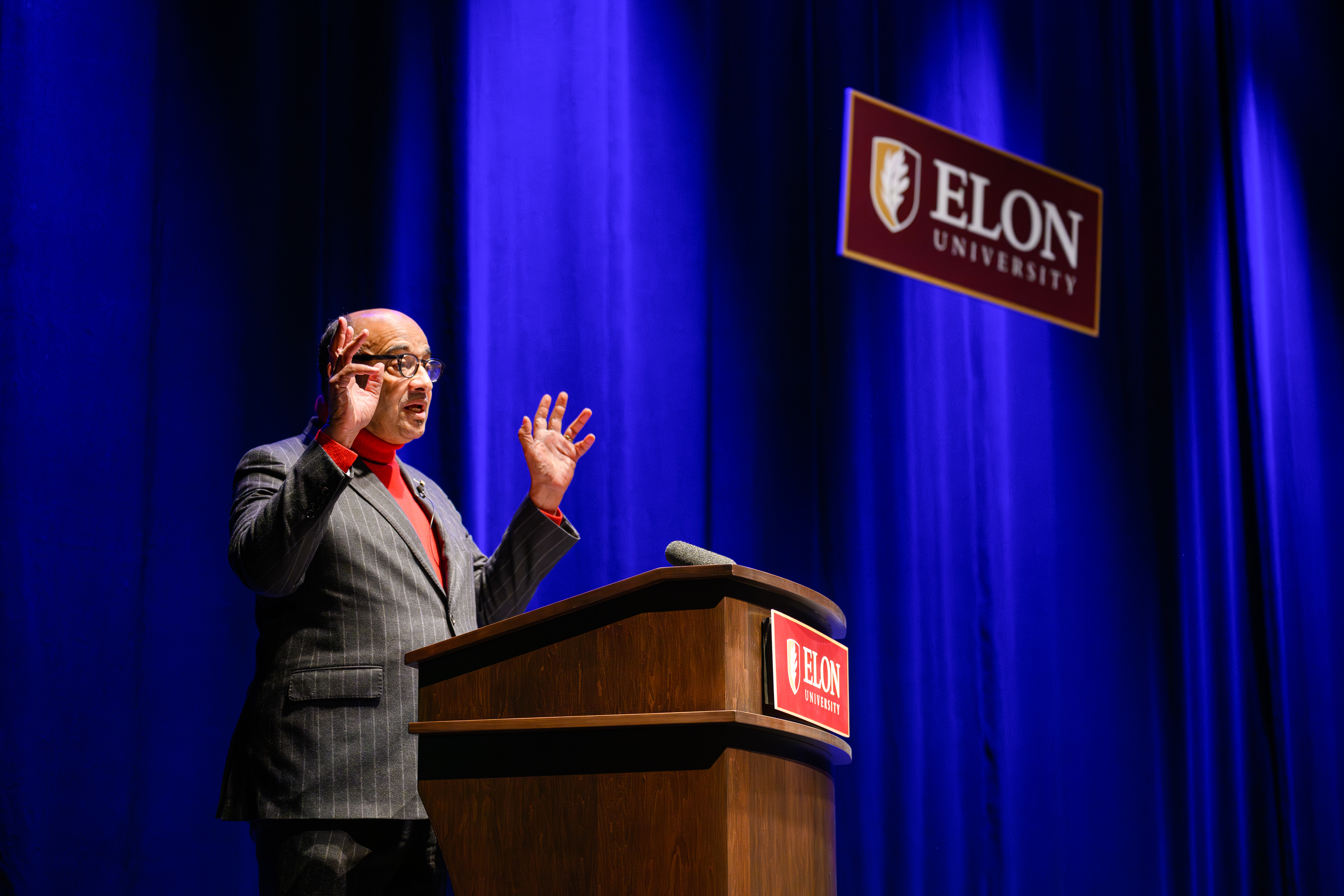
Appiah argues that 鈥渢he truth鈥� about Martin Luther King, Jr. rests not in the contradictions that we 鈥渨aste our time trying to reconcile,鈥� but that he was 鈥渁 performer, the galvanizing voice and countenance of the civil rights struggle.鈥�
鈥淭he ultimate moral truth about the man in the pulpit will be found where else but in the pulpit,鈥� said Appiah. 鈥淥nce we do remember King鈥檚 sound, his voice, his intonation, his cadences, there is no real question about why it is he of all the leaders of the civil rights movement whom we remember.鈥�
And, at a time of deep division in the United States, Appiah argued that King鈥檚 words and sound hold great significance.
鈥淣one of America鈥檚 treasury of orators is more relevant in recalling to us a vision of a country of equals united in the search of the true meaning of the American dream, and reminding us that we are one people, entrusted with the government of this republic he cherished, this nation, with our shared inheritance.鈥�