

The Power of Interdisciplinary Faculty Collaborations

Professor Jessie Moore, director of 榴莲app官方网站入’s Center for Engaged Learning
榴莲app官方网站入鈥檚 approach to undergraduate research goes beyond traditional one-on-one supervision and support by faculty steeped in their fields of expertise 鈥� and there can be plenty of benefits to an intentional co-mentoring approach for professors and students alike.
The growth of collaborative approaches to mentoring undergraduate researchers is fueled in part by the work of the , established in 2012 as a means for the study and promotion of high-impact learning practices across higher education globally.
Today, more than two dozen faculty-led, co-mentoring collaborations currently exist across disciplines. For example: Faculty in exercise science and psychology have combined their expertise in survey research, data analysis, and qualitative methods to mentor students with undergraduate research projects, while environmental studies and professional writing faculty have teamed on undergraduate research projects tied to sustainability and infrastructure.
鈥淭his allows you to draw upon the strengths of each mentor, and when there are multiple students involved, they鈥檒l learn not only from faculty, but from each other,鈥� said Professor Jessie Moore, director of the Center for Engaged Learning. 鈥淚t also creates a sense of community so that the students are not only looking to their immediate mentor, but to other faculty whom they’ve had a chance to meet.鈥�
榴莲app官方网站入’s communities of practice 鈥� informal gatherings of professors who meet multiple times each semester to discuss undergraduate research mentoring 鈥� are among the strongest support systems for faculty mentorship. These meetings, which take place in classrooms, conference rooms, and even campus coffee shops, allow faculty to exchange ideas, troubleshoot obstacles, and refine research mentoring strategies.
Unlike structured faculty development workshops, communities of practice offer an open, casual space for discussion. Some meetings coincide with major undergraduate research deadlines, helping faculty prepare students for applications to national conferences. Others focus on general mentoring challenges, giving faculty鈥攂oth new and experienced鈥攁 platform to share insights.
By bringing together professors from diverse disciplines, communities of practice encourage unexpected collaborations, Moore said. Professors who may not naturally interact across their departments find opportunities to co-mentor students, sparking interdisciplinary research projects that benefit all involved.
鈥淭hey also tend to be a space where you can have a faculty member who has been at the institution for a while and is fairly experienced interacting with a colleague who is newer to the institution, a kind of a generational intersection,鈥� Moore said. 鈥淭hat鈥檚 not one directional, either. The longstanding faculty member is learning from junior colleagues where everyone can share strategies and resources.鈥�
Stories of Faculty Interdisciplinary Collaboration
Leadership Development at the Intersection of Engineering and Music Theatre聽聽
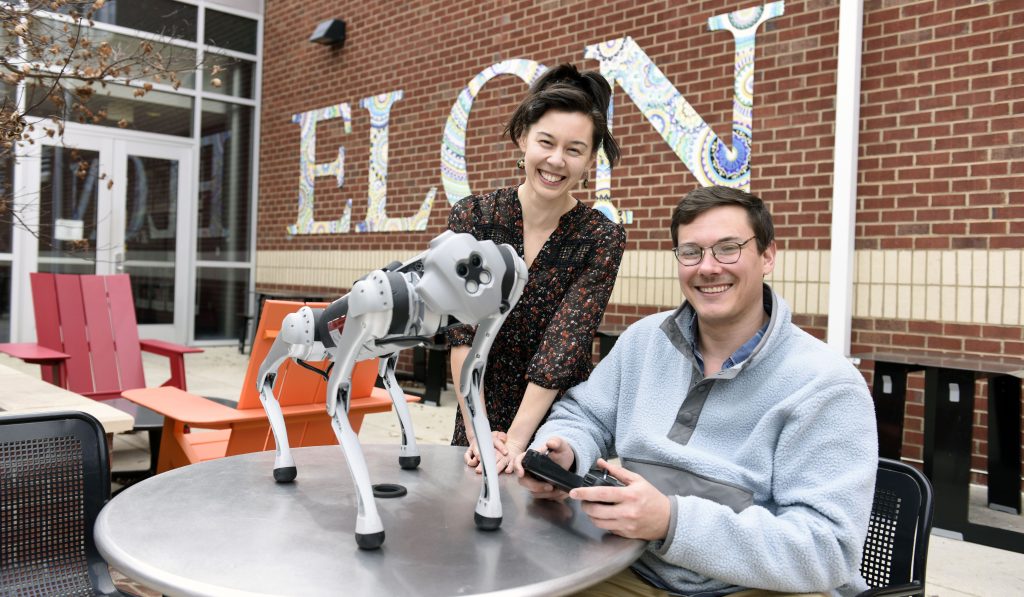
What do you get when you connect faculty and students from the Department of Performing Arts and the Department of Engineering? Answer: 鈥淏ruiser鈥� and 鈥淩ufus,鈥� robotic dogs that captured the imaginations of students involved in 鈥淟egally Blonde: The Musical鈥� at 榴莲app官方网站入.
Assistant Professor Courtney Liu and Assistant Professor Blake Hament joined efforts in 2024 to transform how students and audiences view the interplay of STEM and the arts.
Friends from their undergraduate studies at Duke University, the duo received a grant through 榴莲app官方网站入鈥檚 Fund for Excellence in the Arts and Sciences for Hament鈥檚 engineering students to work on robotic animals with Liu鈥檚 music theatre students planning a production of the popular 2001 film.
鈥淭his was a lightbulb moment for me,鈥� Liu said. 鈥淎s a junior faculty member, it was great leadership training in a lot of ways because we were navigating complex communication channels and cultural norms in our disciplines, and we were learning to pool resources.鈥�
Liu and Hament now plan to document the experience in a research paper with student co-authors. Their takeaway: Everyone can benefit from interdisciplinary partnerships in undergraduate research. For faculty, remember to define 鈥渟uccess鈥� in advance and make sure the project makes sense for both your students and your scholarship.
“This opportunity to embrace risk and take a chance and then see it all work out builds confidence,鈥� Hament said. “Be prepared to be flexible and definitely understand your own goals.鈥�
Where Building Interdisciplinary Relationships Benefits Everyone聽
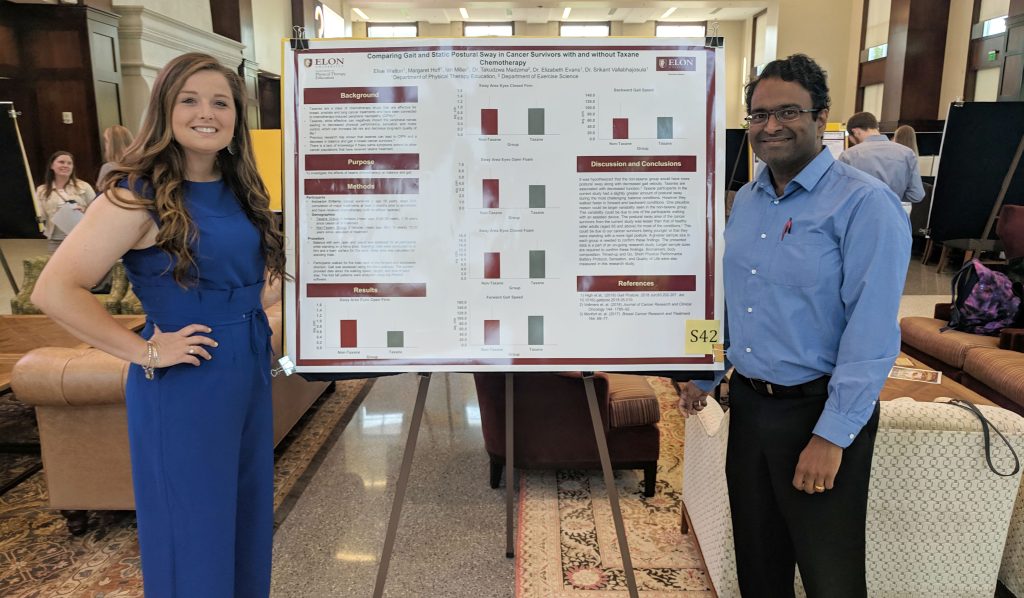
Srikant Vallabhajosula has been described as 鈥渢he ultimate collaborator.鈥� Though he primarily works with doctoral students, the professor of physical therapy education has forged partnerships with undergraduate faculty across disciplines.
A biomechanics scholar specializing in Parkinson鈥檚 disease, geriatrics, and sports, Vallabhajosula had learned in 2012 that exercise science faculty were planning to collect data at Francis Center, home to the university鈥檚 School of Health Sciences, to study athletes’ gait. They warmly accepted his offer to help with that collection.
Vallabhajosula has since partnered multiple times with Professor Caroline Ketcham and Assistant Provost Eric Hall on research with undergraduates, some of whom later pursued careers in physical therapy.
Vallabhajosula sees benefits to cross-disciplinary relationships: mentoring students who might not otherwise engage with his expertise and learning techniques from younger students that improve his work with graduates.
He also recruits psychology students and often attends 榴莲app官方网站入鈥檚 Undergraduate Research Program workshops to discover resources and curricular opportunities for recruiting students passionate about scholarship.
鈥淓very time I go, I learn something new,鈥� he says. 鈥淯ndergraduate research opens doors鈥攁nd I didn鈥檛 realize I, too, could knock.鈥�
At the same time, 榴莲app官方网站入 provides faculty and students with structured resources to deepen research experiences such as the , which prompts students and their mentors to reflect on how research connects to broader academic and career goals.
Short for 鈥淔acilitating Integration and Reflection of the Elon Experiences,鈥� the toolkit includes specific questions for faculty to use at different stages of the research process to guide students in making meaningful connections between their research, coursework, and aspirations. A forthcoming version will encourage students to seek mentorship from multiple faculty members, reinforcing the culture of interdisciplinary collaboration.
The Center for Engaged Learning also hosts national research seminars that gather faculty from institutions around the world who publish studies, book chapters, and open-access resources that shape best practices in high-impact learning practices.
(Collaboration)聽allows you to draw upon the strengths of each mentor, and when there are multiple students involved, they鈥檒l learn not only from faculty, but from each other.
– Professor Jessie Moore
The 2014-2016 seminar focused on excellence in mentoring undergraduate research and brought more than 30 faculty from colleges across the nation to identify research topics that would answer questions aimed at helping students thrive in their work. That work led to a special issue of the and an edited collection with the Council on Undergraduate Research.
Through ongoing faculty development, interdisciplinary mentorship models, and structured reflection tools, Moore added, the university ensures students receive the highest level of support in research and creative work.
And as new strategies 鈥� such as the use of AI in research ideation and visualization 鈥� continue to evolve, Moore predicts even more opportunities for professors to collaborate, innovate, and nurture their students鈥� academic growth. 鈥淲e have a deep commitment to not only mentoring undergraduate research,鈥� Moore said, 鈥渂ut studying how to do it more effectively.鈥�